
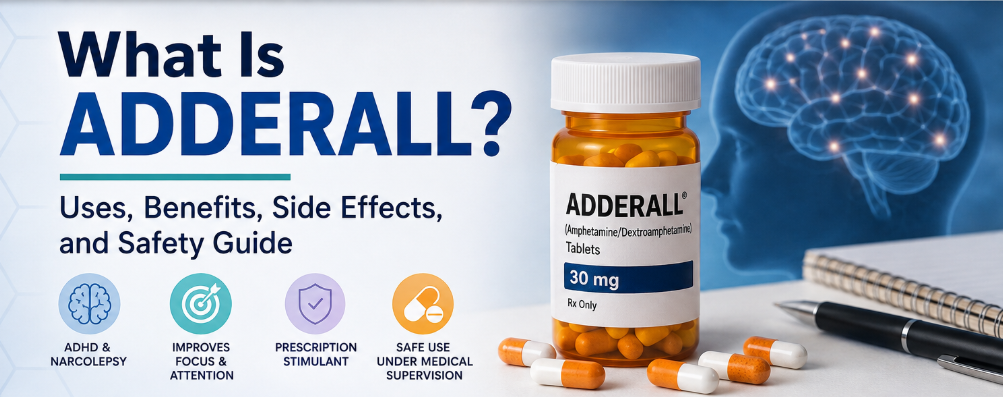
Adderall is one of the most widely recognized prescription medications used to treat Attention-Deficit/Hyperactivity Disorder (ADHD) and narcolepsy. Millions of children, teenagers, and adults in the United States and Canada rely on this medication under the supervision of qualified healthcare providers to help improve focus, attention, and daily functioning.
The active ingredients in Adderall are amphetamine and dextroamphetamine, two central nervous system stimulants that work together to increase the availability of important brain chemicals involved in attention, motivation, and impulse control. When used as prescribed, Adderall can significantly improve the quality of life for people living with ADHD or excessive daytime sleepiness caused by narcolepsy.
However, because Adderall is a prescription stimulant with the potential for misuse and side effects, it should only be taken under medical supervision. Understanding how the medication works, who it is intended for, and the possible risks can help patients make informed decisions with their healthcare provider.
In this comprehensive guide, you’ll learn what Adderall is, how it works, approved medical uses, potential benefits, common side effects, safety precautions, dosage information, and frequently asked questions.
What Is Adderall?
Adderall is the brand name for a prescription medication containing a combination of amphetamine and dextroamphetamine, commonly referred to as amphetamine salts. It belongs to a class of medications known as central nervous system (CNS) stimulants.
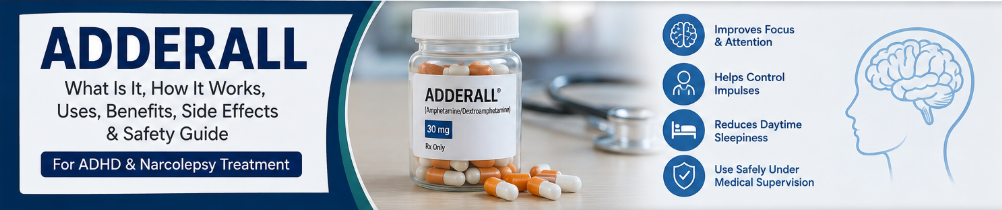
The medication is approved by healthcare authorities for treating:
- Attention-Deficit/Hyperactivity Disorder (ADHD)
- Narcolepsy
Adderall is available in two primary formulations:
Adderall Immediate Release (IR)
The immediate-release version typically begins working within 30–60 minutes and may require multiple doses throughout the day depending on the treatment plan.
Adderall XR (Extended Release)
Adderall XR is an extended-release formulation designed to provide symptom control for a longer period with a single daily dose. Many patients prefer this option because it reduces the need for additional daytime doses.
Another medication containing similar active ingredients is Mydayis, an extended-release prescription stimulant that offers longer-lasting symptom control for some patients with ADHD. Although these medications contain similar ingredients, they are not identical and should only be used according to a healthcare provider’s recommendations.
How Does Adderall Work?
People with ADHD often experience differences in how certain neurotransmitters function within the brain. Two of the most important neurotransmitters involved are:
- Dopamine
- Norepinephrine
Adderall increases the activity of these chemicals by helping the brain release more dopamine and norepinephrine while also slowing their reabsorption.
As these neurotransmitters become more available, many patients experience improvements in:
- Focus
- Attention span
- Organization
- Task completion
- Working memory
- Impulse control
- Hyperactivity
- Mental alertness
For individuals with narcolepsy, these same effects help promote wakefulness and reduce episodes of excessive daytime sleepiness.
It is important to understand that Adderall does not cure ADHD or narcolepsy. Instead, it helps manage symptoms while the medication is active in the body.
Approved Medical Uses of Adderall
Healthcare providers prescribe Adderall for specific medical conditions after a careful evaluation.
1. Attention-Deficit/Hyperactivity Disorder (ADHD)
The most common use of Adderall is treating ADHD.
ADHD is a neurodevelopmental condition that affects children and adults. Symptoms may include:
- Difficulty paying attention
- Forgetfulness
- Poor concentration
- Disorganization
- Hyperactivity
- Impulsive behavior
- Difficulty completing tasks
- Frequent distractions
People living with ADHD often struggle at school, work, or in personal relationships because maintaining focus can be challenging.
Adderall helps improve communication between brain cells involved in attention and executive functioning. Many patients notice better concentration, increased productivity, and improved ability to complete daily responsibilities when the medication is used as prescribed.
2. Narcolepsy
Narcolepsy is a chronic neurological disorder that affects the brain’s ability to regulate normal sleep and wake cycles.
Common symptoms include:
- Excessive daytime sleepiness
- Sudden sleep attacks
- Difficulty remaining awake
- Fatigue
- Reduced alertness
Prescription stimulants such as Adderall may help individuals remain awake during the day and improve overall daily functioning.
Treatment plans for narcolepsy often combine medication with healthy sleep habits and lifestyle modifications recommended by a healthcare provider.
Benefits of Adderall
When prescribed appropriately and monitored regularly, Adderall may provide several benefits for eligible patients.
Improved Attention
Many individuals with ADHD experience a noticeable improvement in their ability to concentrate on conversations, school assignments, work tasks, and daily responsibilities.
Better Focus
One of the primary reasons healthcare providers prescribe Adderall is to improve sustained attention, allowing patients to stay engaged in tasks for longer periods.
Reduced Impulsivity
People with ADHD often act before thinking. Adderall may help reduce impulsive behavior by improving self-control and decision-making.
Increased Productivity
Patients frequently report that they can organize tasks more effectively, manage their time better, and complete important activities with fewer distractions.
Improved Academic Performance
For students diagnosed with ADHD, treatment may support better classroom participation, homework completion, note-taking, and exam preparation when combined with appropriate educational strategies.
Enhanced Workplace Performance
Adults with ADHD may find it easier to meet deadlines, stay organized, prioritize responsibilities, and maintain focus during meetings or complex projects.
Better Wakefulness in Narcolepsy
For people with narcolepsy, Adderall can help reduce excessive daytime sleepiness and improve alertness during normal waking hours.
Common Side Effects of Adderall
Like all prescription medications, Adderall may cause side effects. Not everyone experiences them, and many people find that mild side effects improve as their body adjusts to treatment. Always discuss any new or persistent symptoms with your healthcare provider.
Some of the most common side effects include:
- Decreased appetite
- Dry mouth
- Difficulty sleeping (insomnia)
- Headache
- Nervousness or anxiety
- Increased heart rate
- Mild increase in blood pressure
- Upset stomach or nausea
- Weight loss
- Irritability
- Dizziness
- Excessive sweating
Healthcare providers often recommend taking Adderall early in the day to reduce the risk of sleep disturbances. Maintaining proper hydration and following a balanced diet may also help manage some common side effects.
Serious Side Effects
Although uncommon, Adderall can cause serious side effects that require immediate medical attention. Contact a healthcare provider or seek emergency care if you experience:
- Chest pain
- Shortness of breath
- Fainting
- Severe dizziness
- Sudden vision changes
- Hallucinations
- Confusion
- Aggressive or unusual behavior
- Seizures
- Signs of an allergic reaction, such as swelling of the face, lips, tongue, or throat, or difficulty breathing
Patients should never ignore symptoms that feel severe or unusual.
Possible Long-Term Risks
Long-term use of Adderall should be monitored regularly by a healthcare provider. Routine follow-up appointments help evaluate the medication’s effectiveness and identify any potential concerns.
Areas that may be monitored include:
- Blood pressure
- Heart rate
- Weight
- Growth in children and adolescents
- Sleep quality
- Mental health
- Ongoing symptom control
Some individuals may also develop tolerance or dependence, making regular medical supervision essential.
Recommended Dosage Information
The appropriate Adderall dosage varies from person to person. Factors such as age, diagnosis, medical history, other medications, and response to treatment all influence the prescribed dose.
Healthcare providers typically begin with the lowest effective dose and adjust it gradually if needed.
Adderall is available in several strengths, including immediate-release (IR) and extended-release (Adderall XR) formulations. The dosing schedule differs between these formulations, so patients should follow their prescription exactly.
Never:
- Take more than the prescribed amount.
- Change your dose without medical advice.
- Share your medication with anyone else.
- Stop treatment suddenly without discussing it with your healthcare provider, if advised.
How to Take Adderall Safely
Using Adderall correctly helps maximize its benefits while reducing the risk of side effects.
General recommendations include:
- Take the medication exactly as prescribed.
- Swallow capsules whole unless instructed otherwise by your healthcare provider.
- Take doses at the same time each day.
- Avoid taking late-day doses unless specifically directed, as they may interfere with sleep.
- Keep regular follow-up appointments for monitoring.
If you miss a dose, follow your healthcare provider’s instructions. Do not double your next dose to make up for a missed one.
Safety Precautions Before Taking Adderall
Before starting Adderall, inform your healthcare provider about your complete medical history, including any current or past conditions.
Be sure to mention if you have:
- High blood pressure
- Heart disease
- Irregular heartbeat
- Previous heart attack or stroke
- Glaucoma
- Thyroid disorders
- Anxiety disorders
- Depression
- Bipolar disorder
- History of seizures
- Liver or kidney disease
- Substance use disorder
- Family history of sudden cardiac death
A thorough evaluation helps determine whether Adderall is appropriate and safe for your individual needs.
Drug Interactions
Adderall may interact with other prescription medications, over-the-counter products, vitamins, herbal supplements, or recreational substances.
Potential interactions may occur with:
- Certain antidepressants
- Monoamine oxidase inhibitors (MAOIs)
- Blood pressure medications
- Decongestants
- Other stimulant medications
- Some migraine medications
- Acid-reducing medications
- Certain seizure medications
Always provide your healthcare provider and pharmacist with a complete list of everything you take.
Who Should Not Take Adderall?
Adderall may not be appropriate for everyone. Healthcare providers carefully evaluate each patient’s medical history before prescribing it.
People who may need alternative treatment options include those with:
- Certain serious heart conditions
- Advanced cardiovascular disease
- Uncontrolled high blood pressure
- Hyperthyroidism
- Severe anxiety or agitation
- Glaucoma
- Recent use of MAOI medications
- Known allergy to amphetamine or dextroamphetamine
Only a licensed healthcare professional can determine whether Adderall is appropriate for your situation.
Pregnancy and Breastfeeding
If you are pregnant, planning to become pregnant, or breastfeeding, discuss the potential benefits and risks of Adderall with your healthcare provider.
Do not start, stop, or change your medication during pregnancy without professional medical guidance. Your provider will evaluate your individual circumstances and recommend the safest treatment plan.
Can Adderall Be Misused?
Because Adderall is a prescription stimulant, it has the potential for misuse and dependence, particularly when taken without a prescription or in larger amounts than prescribed.
Misuse may increase the risk of:
- Serious heart problems
- Mental health complications
- Dependence
- Overdose
- Dangerous drug interactions
For this reason, Adderall is classified as a Schedule II controlled substance in the United States, reflecting its accepted medical use along with its potential for abuse and dependence. Patients should store the medication securely and never share it with others.
Storage and Handling
Proper storage helps maintain the medication’s quality and reduces the risk of accidental use by others.
Store Adderall:
- At room temperature.
- Away from excess heat and moisture.
- In its original container.
- Out of the reach of children and pets.
- In a secure location to help prevent misuse or theft.
Dispose of unused or expired medication according to your local pharmacy or community medication take-back program.
Adderall vs. Adderall XR vs. Mydayis
Although these medications contain similar active ingredients (amphetamine/dextroamphetamine), they are formulated differently and may be prescribed based on a patient’s individual treatment needs.
| Medication | Active Ingredient | Duration | Common Use |
|---|---|---|---|
| Adderall IR | Amphetamine/Dextroamphetamine | Short-acting | ADHD, Narcolepsy |
| Adderall XR | Amphetamine/Dextroamphetamine | Extended-release | ADHD |
| Mydayis | Mixed Amphetamine Salts | Longer extended-release | ADHD |
Adderall Immediate Release (IR)
The immediate-release formulation begins working relatively quickly and may require more than one dose during the day. Some patients benefit from the flexibility of adjusting dosing schedules based on their healthcare provider’s recommendations.
Adderall XR
Adderall XR is designed to release the medication gradually throughout the day. Many patients prefer this option because it provides longer symptom control with a single morning dose.
Mydayis
Mydayis is another extended-release medication containing mixed amphetamine salts. It is formulated to provide symptom control over a longer period than standard extended-release formulations for some patients. Only a healthcare provider can determine which medication is most appropriate.
Lifestyle Tips to Support ADHD Treatment
Medication is only one part of an ADHD treatment plan. Healthy daily habits can complement medical treatment and improve overall well-being.
Consider these strategies:
- Follow a consistent daily routine.
- Get adequate sleep each night.
- Eat balanced meals and stay hydrated.
- Engage in regular physical activity.
- Use planners, reminders, or digital calendars to stay organized.
- Break large tasks into smaller, manageable steps.
- Practice stress-management techniques such as mindfulness or relaxation exercises.
- Attend regular follow-up appointments with your healthcare provider.
These habits can help improve focus, productivity, and quality of life alongside prescribed treatment.
Frequently Asked Questions (FAQs)
Is Adderall used only for ADHD?
No. Adderall is approved to treat ADHD and narcolepsy. It should only be used for conditions diagnosed by a qualified healthcare provider.
How long does Adderall take to work?
The immediate-release formulation often begins working within 30 to 60 minutes, while extended-release formulations are designed to provide symptom control throughout the day. Individual responses may vary.
Can adults take Adderall?
Yes. Adderall may be prescribed for adults diagnosed with ADHD or narcolepsy. Treatment decisions are based on an individual’s medical history and healthcare provider’s evaluation.
Is Adderall the same as Adderall XR?
No. Both medications contain the same active ingredients but differ in how the medication is released into the body. Adderall XR is formulated to provide a longer duration of action.
Can Adderall be taken every day?
Some patients take Adderall daily as part of their prescribed treatment plan. Others may follow a different schedule based on their healthcare provider’s instructions. Always follow your prescribed dosing regimen.
Can I stop taking Adderall suddenly?
Do not stop taking Adderall without consulting your healthcare provider. They can advise on the safest way to adjust or discontinue treatment if needed.
Does Adderall cure ADHD?
No. Adderall does not cure ADHD. It helps manage symptoms while it is being taken as part of a comprehensive treatment plan that may include behavioral therapy, education, and lifestyle strategies.
Is Adderall safe?
When prescribed appropriately and used under medical supervision, Adderall can be an effective treatment for eligible patients. Regular monitoring helps ensure that the medication remains safe and effective.
Key Safety Reminders
Keep these important points in mind when using Adderall:
- Take the medication exactly as prescribed.
- Never increase or decrease your dose without medical advice.
- Attend routine follow-up appointments for monitoring.
- Inform your healthcare provider about all medications and supplements you take.
- Report any severe or unusual side effects promptly.
- Store the medication securely and never share it with others.
Responsible use under medical supervision helps reduce risks and improve treatment outcomes.
Conclusion
Adderall is a prescription medication containing amphetamine/dextroamphetamine that is approved for the treatment of Attention-Deficit/Hyperactivity Disorder (ADHD) and narcolepsy. By increasing the activity of key neurotransmitters such as dopamine and norepinephrine, it can help improve focus, attention, impulse control, and wakefulness in appropriately selected patients.
Like all prescription medications, Adderall offers potential benefits as well as risks. Common side effects, possible drug interactions, and individual medical history should always be considered before starting treatment. Because Adderall is a Schedule II controlled substance, it should only be used exactly as prescribed and under the guidance of a qualified healthcare provider.
Whether you are newly diagnosed with ADHD, caring for a family member, or seeking reliable information about treatment options, understanding how Adderall works can help you have informed conversations with your healthcare provider. Never use prescription stimulants without a valid prescription, and avoid sharing medication with others.
For additional educational resources on ADHD, prescription medications, and general health information, continue exploring our blog. Staying informed is an important step toward making safe, confident healthcare decisions.